
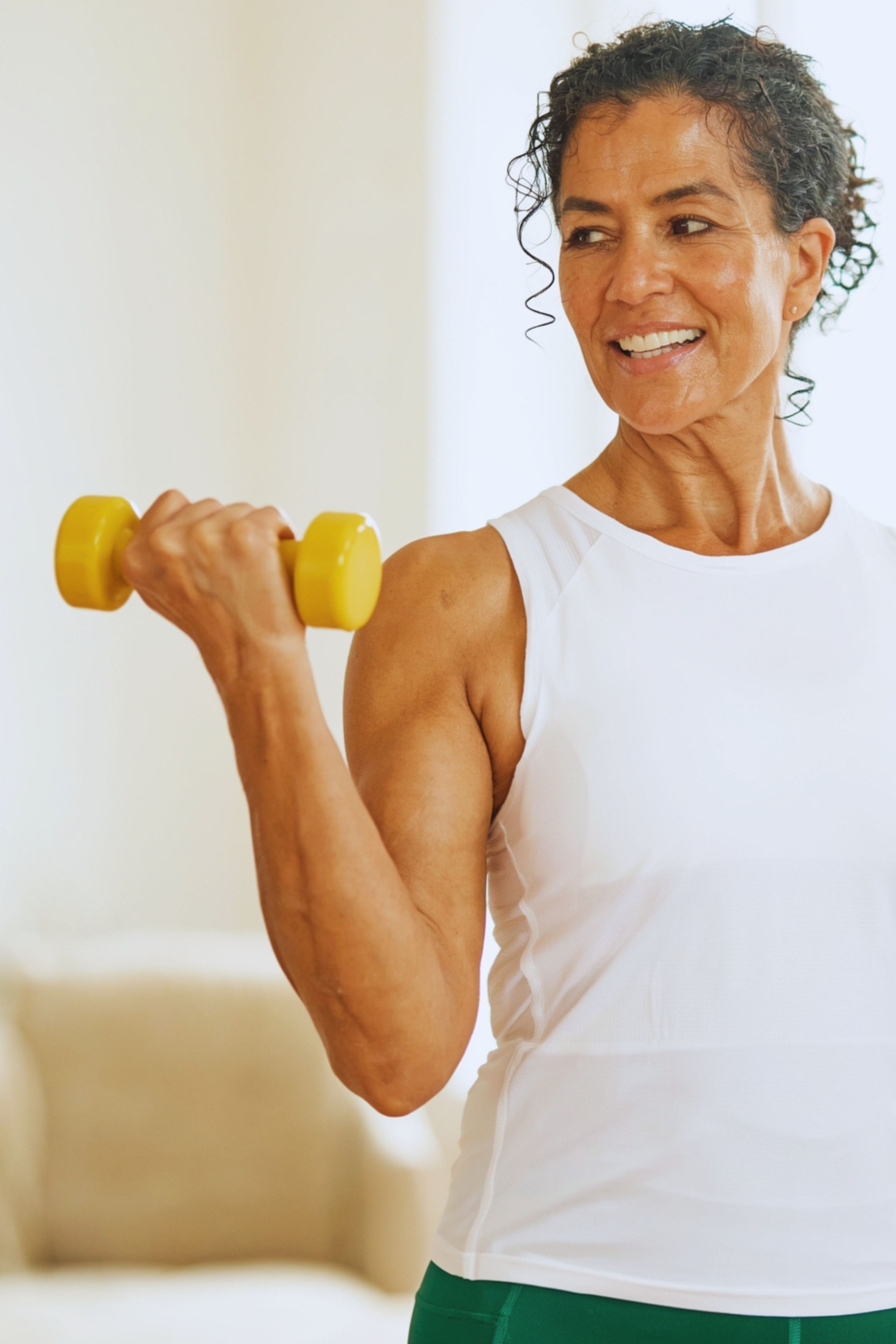
Will lifting heavier weights make me bulky?
It’s a question we hear surprisingly often, particularly from people who are new to resistance training. The short answer is: not unless you work very deliberately towards that goal.
Building significant muscle size is not something that happens accidentally after a few weeks of lifting weights. It takes consistent training, progressive overload, appropriate nutrition, recovery and, importantly, time.
What resistance training can do is help you build and preserve muscle, become stronger, improve your body composition and maintain your physical capability as you get older.
The scientific term behind some of these changes is hypertrophy. It might sound like something reserved for bodybuilders, but it’s relevant to almost everyone – particularly as we move through midlife and beyond.
So, what exactly is hypertrophy, and how much muscle are you really likely to build?
Being students and scholars of all things fitness, here at Bodywise we can get a little geeky about the underlying words and jargon that surround the science of what we do. Hypertrophy is one of those words. At one end ‘hyper’ sounds like over the top energy. At the other ‘trophy’ sounds like you’re getting a prize. Put them together however and you’re definitely onto a winner.
Hyper + trophy = hypertrophy = building muscle
Hypertrophy is the process of increasing the size of muscle fibres as a result of training and adaptation. It occurs when muscles are repeatedly challenged through resistance training. Over time, the body adapts, making the muscles larger and better able to handle the workload.
Hypertrophy occurs when muscles are exposed to resistance training that challenges them beyond their usual level of activity. Over time, the body adapts to this stress by making the muscles larger and more capable of handling the workload.
And this isn’t just about bodybuilding.
As we get older, maintaining muscle becomes increasingly important. Resistance training can help us preserve and build the muscle and strength we need for everyday life. So hypertrophy isn’t simply about how your body looks. It’s about what your body can continue to do.
Challenge, recover, adapt, repeat
Building muscle requires your muscles to be challenged which involves gradually increasing the demands placed on the muscles. This can be achieved by increasing the weight lifted, performing more repetitions, increasing training volume, or improving exercise difficulty.
Resistance exercises such as squats, bench presses, deadlifts, rows, and shoulder presses can all stimulate muscle growth when performed consistently and with appropriate technique. Exercise creates micro-tears in muscles that then repair and get stronger.
Strength versus conditioning
In Bodywise SGPT programming, Strength sessions generally place more emphasis on progressively increasing resistance, while Conditioning sessions use different combinations of resistance, repetitions, work periods and movement to challenge muscular and cardiovascular fitness.
Anybody who has done the ‘upper push, lower pull’ session will testify to how quickly you can increase the weight you can lift. It’s very encouraging.
Do the session, challenge your muscles, recover, come back next week and gradually lift heavier.
The protein factor
Eating right is an essential part of hypertrophy. Muscles require sufficient protein to repair and build new muscle tissue after exercise. Protein-rich foods such as chicken, fish, eggs, dairy products, beans, and other sources can help provide the amino acids needed for muscle repair.
And yes, even snacks such as biltong can contribute – although we’re not suggesting that a packet of pork scratchings down the pub becomes your new recovery strategy!
The sleep factor
Recovery is another major component of hypertrophy.
Muscles do not grow while they are being trained; they adapt during periods of rest and recovery. Getting enough sleep, allowing muscles time to recover between training sessions, and managing training intensity all support muscle growth. Conversely, continuously training without adequate recovery can reduce performance and increase the risk of fatigue or injury. So spread out your sessions and plan a variety of activity within your training program.
Does size matter
The goal isn’t simply to build the biggest muscles possible. Particularly as we get older, maintaining muscle mass, muscle quality and strength can help us remain physically capable and independent.
Greater muscle mass can contribute to strength and power, making everyday activities easier. Resistance training can also support physical function, bones and joints. And because we naturally tend to lose muscle as we age, maintaining it requires us to be proactive.
In other words, use it, challenge it and give your body a reason to keep it.
Feel stronger, look better
If you’re concerned about body image, hypertrophy can also have psychological and aesthetic benefits. Many Bodywise members get into resistance training because they want to improve their body shape and appearance.
Seeing changes in muscle tone, shape and strength can increase confidence, motivation, and enjoyment of exercise. It’s a win-win.
…but don’t go too hyper all at once!
Muscle growth takes time and depends on a variety of factors. The good news is that you don’t have to wait months to start feeling the benefits of resistance training.
Six weeks of consistent training at Bodywise can be enough to start seeing measurable improvements in strength, movement and physical capability, while changes in muscle mass and appearance generally require continued consistency over time.
By combining progressive overload with good nutrition, effective training and sufficient recovery, you give your body what it needs to adapt, build muscle and become stronger.
And remember, building muscle doesn’t mean suddenly becoming bulky. Significant muscle growth takes time, consistency and deliberate effort.
For most of us, the real prize is much simpler: a stronger, more capable body that continues to serve us well as we get older.
Feel Stronger. Live Longer.
By Al Campbell, The Bodywise Member and Author